Showing posts with label tasting. Show all posts

Wednesday, March 21, 2007

Wine Club - Merlot

The task - "Merlot, but interesting." Too much merlot tastes exactly like every other Merlot, so we tasked our wine seller with finding us an interesting variety from different countries. Nothing here is going to become an all-time favorites, but they were certainly interesting.

2005 Trumpeter Merlot Mendoza Argentina
Nice fragrant nose. Plum, black pepper, "mulberries on a hot sidewalk." But a funky edge too. Smoke and burnt marshmallow after some time sitting in the glass. Noticeable acidity, strong mineral finish, slight "oily" body. 2.4 alone, 3.5 food. 1/3.5 alone, 2/4 food. $10.99


2004 Aquinas Merlot Napa Valley
Fruit forward nose (cherry). Plus caramelized sugar, leather and wood. Hint of "well aged compost." Fruity on the palate too. Smooth cherry flavors with a hint of cloves. No tannins. Pleasant, but one-dimensional. Good for quaffing. 3.2 alone, 3.4 food. 2/5 alone, 2/5 food. $11.99


2002 Felipe Rutini Tupungato Valley Mendoza Argentina
Smells "old world." Notes of forest floor - pine needles, musrhooms. "Where the forest meets the sea." Smooth, but not too smooth, some mild tannins. Quite dry, with moderate acidity for a little bite. "Chewy." Very drinkable, but not at all boring. Slight mineral finish. 3.3 alone, 3.3 food. 1/5 alone, 2/5 food. $15.99


2003 Chateau le Marquisat la Perouse Bordeaux
Bad bottle - pretty serious brett. A little bit of brett can be appealing, but this was definitely a fault. Even so, some people found things to like about it. 1.7 alone, 2.1 food. 1/3 alone, 1/3 food. $11.99


(Understanding the ratings: Wines are scored on a 5 pt scale. The scale does not reflect a formal evaluation of the wine, just how much people like or dislike it. Scores reflect averages and ranges across the group. Wines are tasted and scored first alone, and then with food. )

Tuesday, March 06, 2007

Chocolate Tasting

On Sunday I invited a bunch of friends around to taste some chocolate with me. I'd ordered some E. Guittard single origin bars to taste, and then had collected up various odds and ends
I'd gotten in trade from people on the net. I wanted to taste them all alongside the basic couvertures I'm using for my chocolate making, to see if there was something I should be using instead, or if any of them called out for use in a particular pairing.

We tasted 13 different chocolates - 10 dark and 3 milk.

Dark Chocolates
1. E. Guittard 61% (B)
2. Noel 64% (B)
3. New World 64% (U)
4. E. Guittard Sur del Lago Venezula 65% (SO)
5. E. Guittard Quevedo Ecuador 65% (SO)
6. E. Guittard Chucari Columbia 65% (SO)
7. E. Guittard Ambana Madagascar 65% (SO)
8. Valrhona 2002 Chuao Venezuala 65% (SE)
9. E. Guittard 72% (B)
10. El Rey Apatmate Carnero Venezula 74% (SO)

Milk Chocolates
11. Callebaut Milk (B)
12. El Rey Irapa Rio Caribe 40% (SO)
13. E. Guittard Orinoco 41% (B)

B=blended, SO=single origin, SE=single estate, U=unknown

I have a horrible chocolate vocabulary, so I don't have detailed tasting notes to share. But I was pleased that the E. Guittard chocolates I have been using stood up well against the rest. I didn't particularly like the El Reys - as one attendee, also a chocolatier, said "I know I'm supposed to be impressed by El Rey, but I'm just not." The 74% in particular was downright unpleasant - kinda chalky. I'm not really sure what #3 was - it was labeled as "New World 64%" but I can't find anything like that anywhere on the net.

Of the four Guittard single origin bars, the Ecuadoran (#5) was the favorite. Mostly, I think, because it tasted the most like how we expect chocolate to taste. The others were more varietally distinct. #6 was interesting - woody, smokey and kind of peaty - might be good on it's own as a single origin truffle.

#8, the single estate bar, was very complex. Lots of layers of flavor. It comes from the Chuao cocao bean, which is only grown in one small place in Venezula, which is only accessible by the ocean, blah-blah-blah... Very unique, very interesting. It's a vintage chocolate, in that it has a year of harvest associated with it, and is made only from beans from that harvest. This was a freebie that I got from Chocosphere when I placed my giant chocolate order with them recently.

#2 came from an eGullet friend who traded me her go-to chocolate pistole for some of my bonbons. It was quite different from the others in the tasting, I think because it has much lower acidity than the others. It had some distinct anise and cinnamon kind of notes. Some people thought it was almost peanut-buttery. It's not a clean enough tasting chocolate that I would want to use it for general use, but I may play around with it for for a cinnamon or peanut butter center, places where it's unusual character will contribute.

The milk chocolates were, well, milk chocolate, which I mostly don't like. But the E. Guittard Orinoco was better than the other two, so I'll keep it as my basic milk chocolate for now. Even my friend Sue liked it, and she generally doesn't like milk chocolates that are high in cocoa content. So if I've found a milk chocolate that both she and I like, then it's definitely a keeper!

Thursday, February 01, 2007

Wine Club - Bordeaux

2002 Chateau Brown Lamartine Bordeaux Superieur
Pepper, leather, tobacco, dark fruits - raspberry?, chocolate. Palate much less complex than the nose would imply - pretty much just tart raspberry. Light bodied but alcoholic, with a peppery tannic bite in the throat. 2.7 alone, 3.7 food. 1/4 alone, 3/5 food. $17.99


2003 Chateau La Lauzette-Declercq Listrac-Medoc Cru Bourgeois
Opens with earthy mushrooms, then cherry, pepper and burnt sugar. Nose continues on the palate, with cherry and black pepper. Minerals on the finish, some pleasant bitterness. Quite tannic, moderate balanced acidity. 2.5 alone, 3.4 food. 1/3.5 alone, 3/4 food. $19.99


2000 Chateau Roland La Garde Cuvee Prestige Premieres Cotes de Blaye
Hints of sweetness on the nose - strawberry, caramel, black cherry, and a hint of fir trees. The wine is actually very dry, but fruit forward, with a nice and long lasting fruity finish. Just a hint of minerals on the finish as well. Moderate acidity, firm tannins. 3.0 alone, 3.6 food. 1/4 alone, 2/4.5 food. $20.99


2003 Chateau Cantenac Saint Emilion Grand Cru
Very evocative nose for some: "romantic, dark and mysterious," "blooming tropical flowers on a hot humid night." Cherry and black pepper on the palate. Very long, balanced finish. Medium to full bodied with well integrated tannins and balanced acidity. 3.4 alone, 3.7 food. 2/4 alone, 2/5 food. $31.99


For the food portion of the evening, I seared up a piece of NY Strip steak and served thinly sliced pieces. I really felt that we needed a nice hunk of medium rare protein to fully appreciate these wines. As I stood in the kitchen over the smoking hot cast iron pan, my wine club companions were a little skeptical of the lengths I was going to. But I'm pleased to say they all saw the light once they tasted the combination. In deference to our vegetarian member, and because we all love cheese, we also had some Piave, which is one of the all-time great cheeses.

Saturday, January 13, 2007

Wine Tastings Loosen Up

Great New York Times article about new trends in wine tasting.

Andrew Sia wanted to find a sommelier who would lecture to his wine tasting club, but was not sure he could afford it. Then there was the matter of the ice cream.

In addition to enjoying wine, Mr. Sia, 34, fancies making his own frozen sorbets and ice creams. Though it seemed to him a natural fit to pair the two, he suspected a wine consultant might not agree.

“Our first concern was that it was going to be stuffy,” Mr. Sia said. “We wanted this to be more of a party.”

This is exactly the approach I'm taking with the Tastings part of my Tammy's Tastings business. It's not about being a food snob, it's about having fun. One idea I can't wait to try with someone is to do a bunch of blind taste-offs. Like the old Pepsi challenge. At one table, it's Coke vs Pepsi. At another, it's Jif vs Skippy. Hershey's vs Ghiradelli. Etc. This is the kind of idea that would scale really easily to any size of group and doesn't come off as at all "high-brow." Although it could certainly be as upscale as a client wanted it to be (white truffles vs black? foie gras vs chicken liver?).

Monday, December 11, 2006

Taste of the Tropics

I came back from Florida with a suitcase full of fruit. Not oranges and grapefruits, as might be expected this time of year. My selections were a little more unusual. Spiraling clockwise to the center from bottom left: kumquats, black sapote, papaya, guava, dragonfruit, passionfruit, atemoya and carambola. I'd tried some of these before, but others were completely new. I'd always rather share a new discovery than keep it to myself, so I invited a bunch of friends over for a Taste of the Tropics.

The black sapote was the most unusual fruit we tried, I think. It's ripe when the outside is green black and extremely soft. The inside contains several large seeds and a very soft, chocolate pudding colored pulp. In fact, the texture is a lot like chocolate pudding too - very creamy and custardy. Flavorwise, it's hard to describe. It's very mild and slightly sweet, but somehow also suprisingly addictive - we just keep going back to it until the skin was scooped clean!

This is the inside of the Atemoya. It contains several dark black and poisonous seeds, which I'd removed before taking this picture. It's a hybrid of two slightly better known tropical fruits, the sugar apple and the cherimoya. The rollinia pictured in my Fruit and Spice Park post is also in the same family. The flesh is cool and moist and smells a little bit like mango and pineapple. The flavors are in the same vein but mostly sweet with a mild tanginess. This one was many people's favorite.

I forgot to take pictures of our next two fruits. After the Atemoya we moved on to Carambola. You've probably seen it before - when cut across the fruit, it looks like a star (thus it's more common name of star fruit) and is commonly used to decorate fruit trays. They come in several varieties. This one was among the sweetest, and even then it wasn't very. It was a deep yellow color and smelled like green peppers. It was very juicy and mild, slightly sweet and slightly tangy.

The contrast with our next entry was certainly pronounced! Kumquats are very intense. The pith is not as powerfully bitter as oranges and lemons and the like, but it does impart a bitter aftertaste. The pulp is sour, but there's some sweetness in there too. We found that it was much better to pop one in your mouth whole and eat it all at once than to take bites of a single kumquat. Eaten all together, the flavors meld into a very harmonious whole.

Dragonfruit is the fruit of a cactus. It's more pretty than tasty - you can understand its importance as a desert fruit because the flesh is just bursting with water. It smells kind of melony and floral. With the crunchy seeds, it's very reminiscent of kiwi fruit, but without the acid tang of kiwi. Instead there's sort of a mild watery flowery sweetness. Coming after the pungent kumquat, this made for a nice palate cleanser, but I'd probably change the order were I to do this again.

Most of us weren't very fond of the papaya. It looks and smells very much like cantaloupe. It tastes like... well... papaya. There's a hint of something odd about it. We think it's the latex - green papaya is a prolific source of latex, from which the meat-tenderizing enzyme papaian is produced - and that flavor seems to stick around even in the ripe fruit. It was much better sprinkled with a little lime juice. We also tasted the seeds, which have a distinct peppery bite. It was easy to see see why in some countries dried papaya seeds are used to adulterate more expensive black peppercorns.

We had to move the guava off the table while we were tasting the earlier fruits, because its lovely fruity muskiness was overwhelming our attempts to smell the milder fruits. But upon cutting, what was a pleasant aroma in the whole fruit became quite acrid and sharp. Once we could get past the smell, however, the flavor was really nice. Something like a cross between an apple and pear with a hint of musky mystery. This was definitely one to eat cut into wedges, so everyone could experience the variety of flavors and textures. It went from a a pear like skin to a really creamy smooth bit right in the center.

Passionfruit is one of my favorite flavors. When I made some passionfruit chocolate truffles for a sale earlier in the year, I was surprised to hear that many of my customers were not familiar with passionfruit. People were really skeptical that this was going to be good - a passionfruit is ripe and ready to eat when the outside starts to get wrinkly and dessicated. They're very light, so it's easy to think that it's going to be all dried up. But instead, they're filled with a tart and tangy pulp that surrounds a bunch of seeds (which you can eat or not as you so desire). Mmm.

I bought all these fruits at a Homestead, FL fruit stand called Robert is Here. More details on this mecca for fruit lovers is still to come.

Saturday, November 11, 2006

Wine Club - Cotes du Rhone

Wine Club this week was Cotes du Rhone. We didn't have as good a food pairing as we should have had for this one (I should have saved some of my cassoulet from the week before), so I expect the "with food" scores would have been higher with another pairing. All scores are averages across the group (the scores with the "/" indicate the range across the group). Notes are a compilation of the entire group's comments. Personally, I was at the high end, giving most of these wines a score of 4. The exception for me was the Les Queyrades, which I found absolutely vile. But other people in the group really liked it, so I don't think it was a flawed wine.

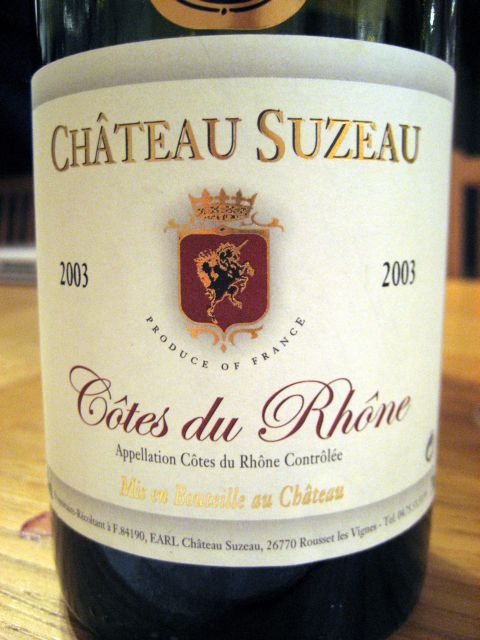
2003 Chateau Suzeau Cotes du Rhone FR
Light garnet, fading to brown on the edge. Pleasant cherry fruit nose. This light bodied wine opens with early fruit which fades quickly to an empty midpoint, but comes back with a strong and long mineral finish. Lots of slate, like "licking rocks." 3.1 food, 2.9 alone. 2/5 food, 1/5
alone. $14.99


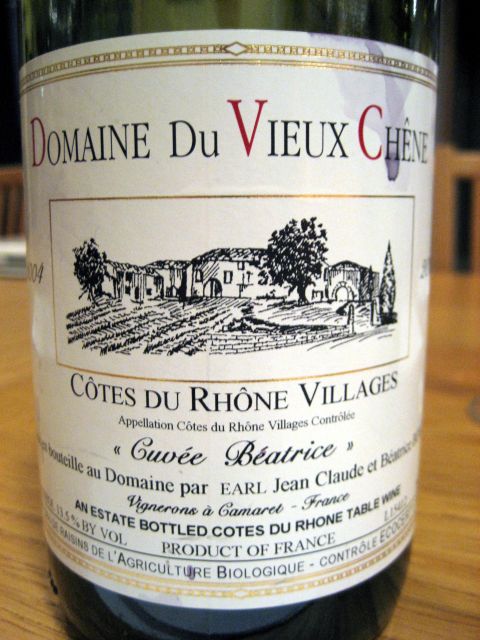
2004 Domaine du Vieux Chene "Cuvee Beatrice" Cotes du Rhone Villages FR
Deep ruby, with a big nose. A little stinky, but in a good way, like camembert. Rich blackberry fruit in a full rich wine with pronounced tannins and a mineral finish. 3.2 alone, 3.3 food. 2/4 alone, 2/4 food. $18.99


2003 Les Queyrades Lirac AOC FR
Red with a hint of orange. Complex nose - pomegranate and green notes along with plenty of dark, earthy, fermented notes. Minimal fruit, peppery and mineraly, with high acidity and heavy tannins. 2.1 alone, 2.6 food. 1/4 alone, 1/4 food. $17.99


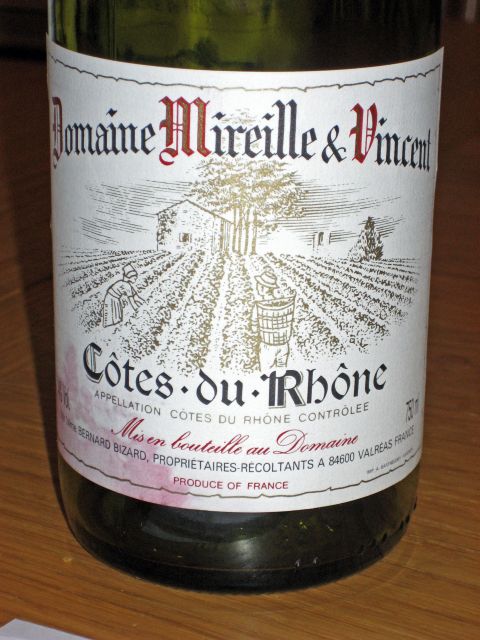
2004 Domaine Mireille & Vincent Cotes du Rhone
Red with a hint of orange. Lots of sweet red fruit (strawberry candy) on the nose plus fresh mown grass, and a little bit of barnyard. Light bodied, with unexpected citrusy flavors, some minerals, and a long finish. 3.4 alone, 3.7 food. 2/5 alone, 2/5 food. $11.99


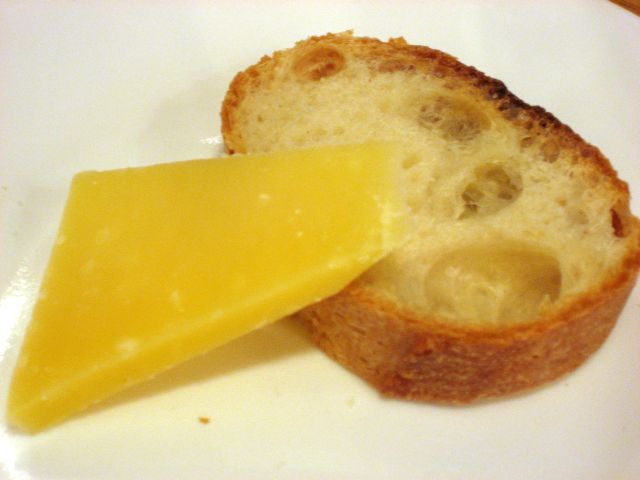
To eat, we had a really nice English farmhouse cheese. The Lincolnshire Poacher is an aged cheese similar to a cheddar. It was a good accompaniment to the wines, as it had quite a bit of the "barnyard" stench that shows up in Rhone wines. It was certainly strong enough to stand up to the earthy elements in some of the wines. It had lots of "flavor crystals" - little amino acid crystals that are a sign of a long-aged hard cheese (you see them in the best parmesan as well) and I always love those in a cheese. Nice crumbly texture. Cotes du Rhones are considered classic food wines, so I had hoped to have some more "dinner" like food to show them with, but my food shopper hit some snags, so we just ended up with the cheese.

Tuesday, November 07, 2006

The importance of tasting

I named this blog Tammy's Tastings for a couple of reasons. One, I like alliteration. And two, and perhaps more importantly, because I think that consciously tasting is the best way to learn about food.

I've run and attended tastings of a huge variety of foods - olive oil, vinegar, bacon, maple syrup, to name but a few. When my husband bought me a four pack of single origin chocolate bars for Valentines Day, the first thing I did was invite friends over for a side by side compare and contrast.

Blind tasting in particular is important. Every month I learn something new from the blind tastings we use in my wine club. Whenever we eat or drink something, we bring to it a lifetime's worth of experience and emotion and knowledge. I "know" that I like French wines better than domestic. So hand me a glass of California Chardonnay and a glass of White Burgundy, and I'm going to look for things I like in the Burgundy, and things I don't like in the California Chard. It's human nature. Hiding all the identifying features of a wine, or a food, or whatever it is, really lets you taste it on its own terms.

I was inspired to write this post by a recent experience with apples. I grew up eating Macintosh apples. That's what my family bought, and I barely knew that other kinds of apples existed! (Okay, I knew about Red Delicious, but even then I recognized that they were a triumph of appearance over flavor.) When I grew older and more worldly, I started eating other kinds of apples. Jonagolds, Empire, Pink Lady, Granny Smith. I found a couple that I particularly liked - Golden Delicious and Honeycrisp - but for the most part I wasn't an apple fan. But I never bought Macintosh. Those were the "average" apples. The "regular" apples. I was a gourmet. I was too sophisticated for the simple Mac.

A couple weeks ago, someone put some apples out for dessert. The package just said "apples." I took one, and it was the best apple I'd tasted in years. And - as I'm sure you've guessed - it turned out to be a Mac.

Tasting is important.

Tuesday, October 31, 2006

Everything is better with duck fat

We carved our Jack-o-lantern last night, and as I was getting ready to roast the resulting pumpkin seeds, I realized that I had leftover duck fat in the fridge from the great cassoulet adventure. Since duck fat is the king of fats, I couldn't resist trying it. My husband wasn't nearly as enthusiastic about the possibilities (it was him saying "don't do anything weird or French to them" that made me remember the duck fat), so I did a batch with butter as well, for a compare and contrast.

They're both good, but there are definitely some subtle differences. The ones with butter taste a little popcorny in a way the duck fat ones do not. The duck fat ones have a little hint of meatiness or umami.

Duck Fat Roasted Pumpkin Seeds
1 1/2 cups pumpkin seeds
2 tsp melted duck fat
kosher salt to taste

Toss washed pumpkin seeds with melted duck fat and sprinkle with kosher salt. Roast in a single layer at 300 degrees for 45 minutes or until as brown as you like them, stirring at the halfway point and later if necessary.
Mmm. Duck fat.

Happy Hallowe'en!

Monday, October 09, 2006

Wine Club - Nero D'Avola

With the arrival of fall, my wine club has moved back to focusing on reds for a few months. I went to my favorite wineseller with a fairly open request - we wanted to taste some reds from Italy, in some sort of geographic or varietal grouping that made sense. We'd already tasted Chiantis, did she have any other recommendations? This is the group that she came up with.

2003 Valle Dell'Acate Il Moro Nero D'Avola, Sicilia IT $22.99
Cherry and dark fruit with pepper in an alcoholic nose. Showed some smoke later in the evening. Taste is not what you'd expect from the nose - tart cherry and dusty rocks with smooth tannins and a sharp finish. There's a strong opening and finish, but a big hole in the middle. Score: 2.7 food, 2.8 alone. Range: 2/4 food, 1/4 alone. Everyday Wines


2004 Feudo Arancio Nero D'Avola, Sicilia IT $8.99
Reticent nose. Green pepper and licorice to begin, with blackberries coming out later. Rounded and fruit forward wine with balanced acidity and smooth tannins. Slightly metallic finish. Some people thougth it was exceptionally good with the cured meat (speck). Score: 2.5 alone, 2.9 food. Range: 1/3.5 alone, 2/4 food. Everyday Wines


2002 Poggio Bidini Nero D'Avola, Sicilia IT $8.99
Stinky cheese and iodine right out of the bottle, which eventually blew off and revealed cherry tobacco and old leather belt. Cherry fruit, good acidity, some backbone and tannic finish. Good, but one dimensional. Score; 3.3 alone, 3.0 food. Range: 2/5 alone, 2/4 food. Everyday Wines


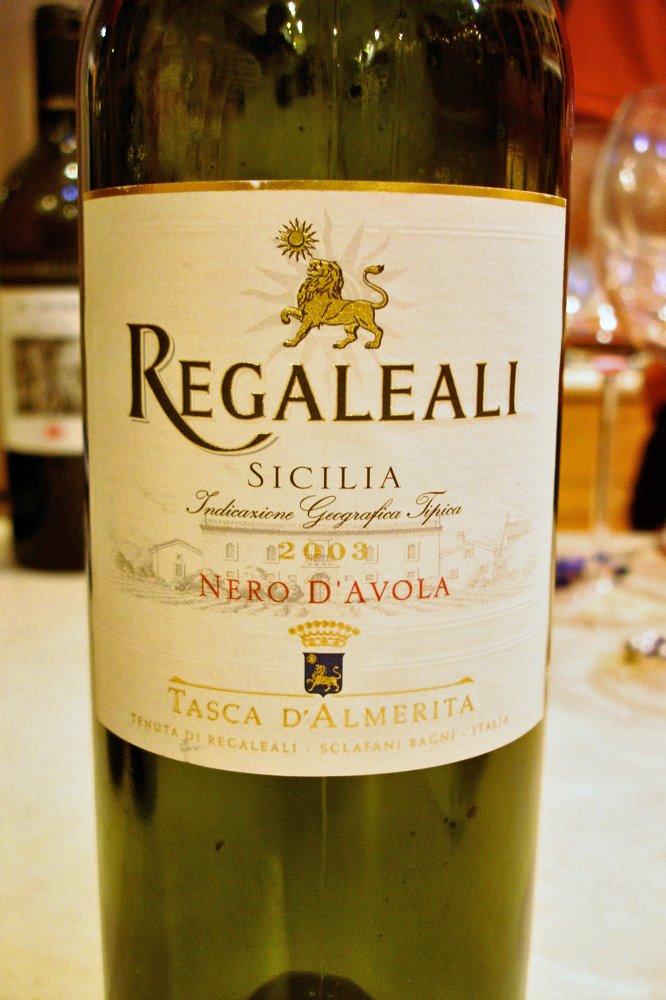
2003 Tasca D'Almerita Regaleali Nero D'Avola, Sicilia IT $17.99
Another stinky cheese nose, with pepper and lots of juicy cherry. Full bodied with the same fruit and pepper on the palate, moderate acidity and fairly strong tannins. Complex finish. Score: 3.5 alone, 3.5 food. Range: 2/4 alone, 2/4.5 food. Everyday Wines


As usual, we tasted the wines alone, and then again with food. The foods for this tasting were two Italian cheeses - a soft cheese with an edible rind that had been wrapped in thyme leaves (my notes say maccognetto de timo, but that may be typo, since Google has no evidence of its existence), and a really fabulous walnut-leaf wrapped pecorino. And some speck, a cured pork product similar to prosciutto or jamon serrano.

I didn't fall in love with Nero D'Avola from this tasting, and I don't think anyone else in the group did either. But since I have a bottle of Nero sitting in the basement, this certainly will help me know what to serve with it! It's definitely a wine that benefits from a little (or a lot) of airtime - all of the wines had odd noses right upon opening and opened up and got much better smelling with some time in the glass.

Friday, September 29, 2006

In Search of Vegan Truffles

A few times a year I make chocolate truffles to sell to friends and neighbors and coworkers. It's my little cottage industry that helps me pay for things like Zingerman's special dinners, or my upcoming trip to Chicago. I know a couple of people who are vegan or otherwise sensitive to dairy, and they asked if I'd thought about making vegan truffles. Not one to turn down a challenge, I started looking in to it.

For dark chocolate truffles like I make, the main non-vegan ingredient is the cream. Cream brings both a liquid component and fat to the truffle equation. There are lots of other liquids you could use for truffles, but most of them don't have enough fat. Even soy cream subsitutes are lower in fat than the real thing. But coconut milk is a high fat liquid that at least one vegan truffle maker uses, so I decided to give that a try.

But then I found out that not all sugar is vegan! So that added another wrinkle to the project, since most chocolate contains sugar, and ingredient lists don't often specify whether it is bone-char processed... So I needed to figure out what chocolates were safe. Fortunately, this was easy enough, using the power of the Internet.

I went off to my local natural foods store and picked up a bar of Green&Black 72% baking chocolate to experiment with. On its own, I'm sad to say the stuff tasted pretty nasty, with a lot of heavy green notes. A little bit of greenness can be nice in a chocolate, but this was over the top. It was slightly better when made into truffles, but I wasn't happy with the results.

So this week I grabbed a couple different bars and did a taste test.

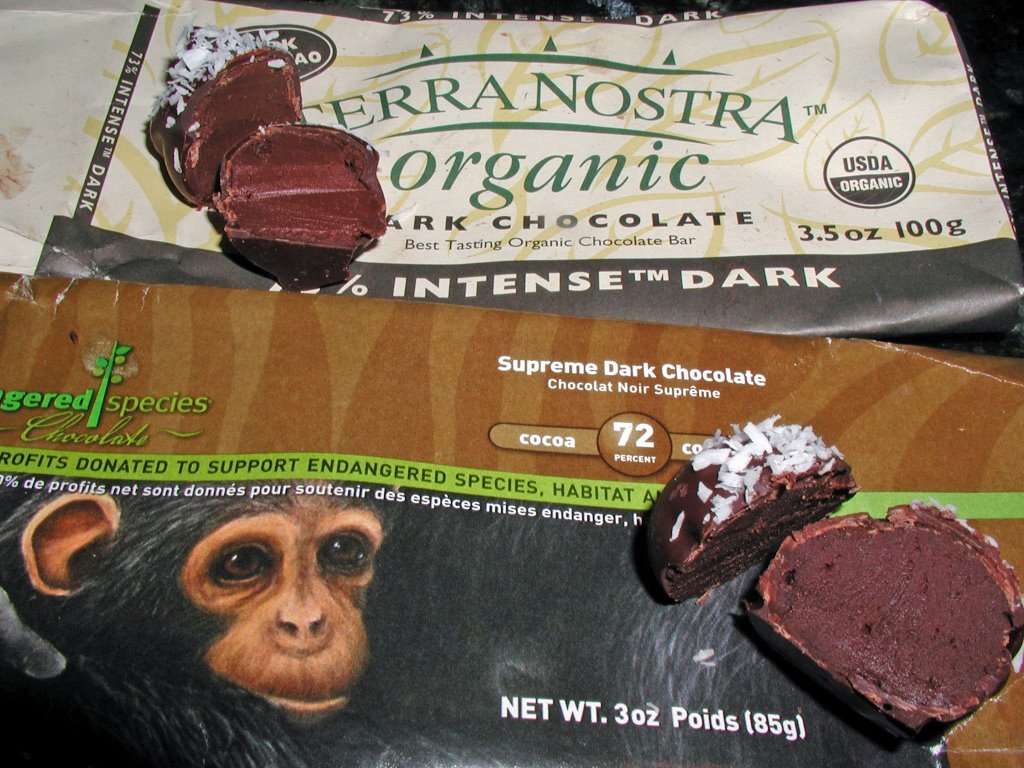
Fortunately, both of these chocolates were better tasted plain than the first one I tried, so I was already off to a better start. Alone, I had a slight preference for the Endangered Species Supreme Dark Chocolate - it was a little rounder, a little sweeter, and had an interesting sort of nutty-coffee thing going on in the background. The Terra Nostra Organic 72% Intense Dark seemed darker and edgier and sharper, but with just a hint of what I hadn't liked in the first one. My fellow tasters were mixed in their preferences, so it was clear we needed to take it to the next step - an actual comparison of ganaches.

The most surprising thing in the ganache making was the color. The Terra Nostra, which tasted so much darker, was actually surprisingly light colored as a ganache. Odd. It was also far, far superior in taste. The nutty-coffee thing in the Endangered Species overpowered the coconut milk and coconut extract in the ganache, whereas the Terra Nostra ganache was nicely integrated. Ding-ding-ding! We have a winner.

Saturday, September 09, 2006

Spanish Olive Oil and Vinegar Tasting, part 2

In my last post, I'd just finished describing the six olive oils we tasted. Now we moved on to the vinegars. Sherry vinegar, to be precise.


(Ignore the scribbles on the labels - these were the sample bottles from the shelves, which - for obvious reasons - are marked.)

We tasted 3 vinegars from Lobato (in the pictures above they all have the word capirete on their labels). One was 8 years old, one was 20 years old, and the last was 50 yrs old! Of course, as we discussed at some length, "years old" is a difficult thing to understand when it comes to sherry vinegars, or sherry for that matter, as they both use the solera system that blends wines or vinegars from different vintages.

Sherry vinegar is kind of interesting. There is a saying in Jerez, from which Sherry hails, that "each cask chooses its on destiny." Some casks of sherry wine age as normal, while others begin to turn to vinegar, and it's not always clear why this happens. Up until 1933, Sherry vinegar wasn't a commercial product. The wine makers always had it, and local cooks would get some from them as well, but no one was producing it for sale until 1933. Sherry vinegar, like Sherry, is made from the Palomino grape, and is aged in American oak barrels.

Unlike when we tasted the olive oils, where you want to breathe deeply and slurp air to maximize the flavors, we were advised to be much more cautious with the vinegars. So we smelled them from a distance while swirling the cups to waft the aromas up to our noses. And we took teeny-tiny sips, or even watered the vinegar down just a bit to be able to appreciate the flavors without the overwhelming acidity.

The 8 year old was the most "vinegary" of the bunch, with a quite high level of acidity. It had a really potent and aggressive nose too, with butterscotch and caramel and a hint of iodine. The 20 yr old vinegar was much more mellow - the nose wasn't harsh at all and had sweet caramely notes. It was smooth and rich and sweet on the tongue too (although you must understand that this is still vinegar we're talking about here, so sweet is relative!). The 50 year old had a really faint nose, and quite a different flavor than we expected. Sherry vinegars are quite different from balsalmic vinegars, which get more and more concentrated and sweeter as they get older. The progression isn't nearly so clear with Sherry vinegars, so this 50 year old vinegar was more acidic and less sweet than the 20 year old. But still not nearly as acidic as the 8 year old, of course! And its flavor was quite fruity.

Having tasted through this "vertical" of Lobate vinegars, we moved onto another producer - Romate - next. Romate is one of the last bodegas in Jerez that still fully locally owned. From them, we tasted a 25 year old standard sherry vinegar, and then a PX vinegar, made from Pedro Ximenex grapes rather than Palomino. The 25 year old was the consensus favorite of all of the standard sherry vinegars. It still smelled quite a bit like sherry, and was really quite sippable! Unlike the Lobate vinegars, which were dominated by dark notes like caramel and butterscotch, this vinegar had lots of high notes to balance the caramel that mostly showed up on a long finish.

The PX vinegar was quite a different beast. Its color was very deep chestnut in comparison to the tan of the others. It's production method is different as well - they take a base of really old vinegar and add to it a small amount of aged sherry, causing a second fermentation cycle as the new sherry turns to vinegar. After that is done, the vinegar is bottled. This complex approach shows through in a complex flavor profile, and the vinegar was another that was pretty "easy" to approach.

I already own a bottle of the 8 year old Sherry vinegar, so I didn't purchase any that night. But I might splurge and get the Romate 25 year old some time - one of the nice things about Sherry vinegar is that even the older bottles aren't very expensive. (With the exception of the PX, which retails for $60 at Zingerman's!)

At this point in the tasting we got to try out the oils and vinegars in some different contexts. First we each got to mix our own vinaigrette to eat with some salad greens (my combination was the Coupage olive oil and the 20 year old Lobate vinegar). Then we tried a small sample of Zingerman's cream of tomato soup alone, and then again with the last minute addition of a spoonful of 25 year old Sherry vinegar. Definitely a flavor enhancer! And we tasted some tomato sliced drizzled with the PX vinegar and sprinkled with sea salt. Again, the major effect was just to enhance the flavors of everything.

The last thing we did was to go back to the olive oils via a blind tasting, to see if we could identify one of the oils we'd tasted in the first go round. One of the attendees was too full to eat another bite, so she poured the mystery oil while the rest of us - including Gauri - waited in the hallway. The mystery oil was the La Amarilla de Ronda and - embarassingly - not a single one of us got it right! Gauri gave the prize (a small can of the LA) to the person who guessed the Coupage, because at least she'd guessed that it was a blend rather than a single varietal.

A very fun evening. These Zingerman's tastings are always a good time and educational too. And at $20 per person, they can be a good bargain, especially if - like me - you take advantage of your 20% off certificate (good that night only) to stock up on oils and vinegars for home!

Thursday, September 07, 2006

Spanish Olive Oil and Vinegar Tasting

It's Spain month at Zingerman's, and last night I attended a tasting of Spanish olive oils and vinegars. Unlike most of their tastings, this one was pretty lightly attended - just 7 of us plus Gauri, our friendly and helpful guide for a tour through Spain.

We started off by tasting 6 olive oils, alone and with bread. As with wine tasting, we started off by looking at the oil, then smelling it, and - finally - slurping it loudly to taste it. The flavor of the oil changes depending where on your tongue it's landing, so it's interesting to note how it evolves on its way down your palate. And you must watch out for the hit of pepper that can grab your throat on the way down. (In Italy, Gauri told us, they judge oils based on whether they are a "one-cough" or "two-cough" oil.)

The first two we tasted were both from near Barcelona, and both made exclusively from Arbequina olives. They were both a bright sunny yellow, with only a hint of green. The first, L'estornell, was a very light oil, with a fruity, grassy nose. It was the mildest of the oils we tasted, inspiring words like "silky, smooth, and delicate." It had just the slightest hint of pepper. The second, Olei Floris, had a very different nose with very strong aromas of tropical fruits and flowers. While the nose was interesting, the taste seemed really off to me - almost as if it was on the edge of rancidity. I raised it to Gauri's attention, and sure enough, a fresh bottle showed none of the characteristic I'd found objectionable. Whereas the L'estornell was very light, this oil was very viscous and thick, and the flavor was correspondingly round and full.
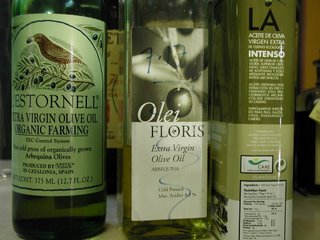
Next, we moved South in Spain, to the Tabernas dessert. Where the oils of the North are mostly made from Arbequina olives, those from the south rely exclusively or in part on the Picual olive. The flavor from the Picual is much more assertive, and apparently Southerners refer to the oils of the north as "cat piss."

Well, we all said upon sampling this next oil, we'd be thrilled if our cats pissed this! The Castillo de Tabernas 100% Picual oil was light green, with moderate viscosity. It was green on the nose too, with lots of different herbal aromas and a hint of mint. The flavor is green and quite assertive, with lots of pepper in the throat. Very different from the preceding Arbequina based oils - rustic rather than refined.

And very different from the next oil, a blend from the very same producer. The Castillo de Tabernas - Coupage is a blend of 60% picual, 20% arbequina, and 20% hoji blanca. A bright yellow-green oil, both the color and viscosity were lighter than the preceding oil. The nose was very floral. In taste, this was a very fresh and smooth tasting oil, with a hint of lemon or other citrus, and a lot of complexity. Tasting these two side by side illustrated the power of the blend - the 100% Picual oil was noticeably less complex, with a lot of up front flavor and a lot of pepper on the finish, but nothing in the middle.


Next up was La Amarilla de Ronda. (You can see its stylish "LA" can next to the L'estornell and Olei Floris above.) Another blend of Arbequina, Picual and Hoji Blanca, this oil is made by a producer who is best known for making wine. He's taken a very winemaker-ish approach to olive oil, and purchases oil from two different villages, carefully blending them in an attempt to reflect the flavor of the region. (Gauri said that this all felt really pretentious to her, so she really wanted to dislike this oil. But then she tasted it.) Another yellow-green oil, with a nose of flower and fruit, it had quite the interesting evolution in my mouth. It opens very mild, then has a hint of fruity sweetness, before a really assertive peppery bite on the finish. Having taken a perhaps too-large slurp, I rated this one a three-cough! Very interesting.

The sixth and final oil was quite different from all the rest. Mariano's oil is from a town very close to the border of Portugal, at about the midway point north to south. It's made of 100% Manzanilla olives (not the kind usually marketed under that name, but a cousin). It was quite a pale yellow, with a very flowery and sweet nose. The nose was completely deceiving, however, as the flavor was extremely different from what the nose implied! It was very herbal and reminded me distinctly of oregano. It was quite complex and interesting, with a bitter finish that made it distinct from all of the other oils we tasted. It was also the oil that tasted most different with bread than on it's own, once again tricking your expectations. (In the topmost picture of this post, the Mariano's is the short square bottle in the front middle.)

And that was our pass through the olive oils. Next up: five very different Sherry vinegars.

Tuesday, September 05, 2006

Wine Club - Chenin Blanc

I host a monthly wine tasting group here in my cohousing community. We gather once a month and taste four wines on a given theme. Sometimes it's a varietal, other times a particular region or style. We taste all the wines "blind" so we're not biased by any preconceived notions we might have. First we taste them on their own, and next with food - it's amazing how many times a wine that has scored poorly in the first pass improves dramatically with some cheese or sausage or other nibble. And vice versa.

We have a lot of fun. We talk about the wines as we're tasting them, and point out different things that we're smelling or tasting. As such, the notes below represent a sort of "group mind" take on wine tasting notes. We each rank the wines on a five point and completely non-scientific scale - 1 is "blech," 2 is "okay, but not for me," 3 is "happy to drink it, wouldn't buy it," 4 is "really good, where can I get it?" and 5 is "great stuff - I'd take out a second mortgage to buy more." The numbers in the notes represent the average score, and then also the range among the group.

Last night we tasted four Chenin Blancs. Chenin Blanc is mostly grown in the Loire Valley region of France, in South Africa (where it is sometimes known as Steen), and also in California. Especially in California, it's often used as a fairly non-descript white blending wine, but there are a few producers doing interesting things with it. In France it reaches quite admirable heights in Vouvray and in some of the most ageworthy whites. Our tasting featured one from Vouvray in France, two very different wines from South Africa, and a Californian example.

Notes:
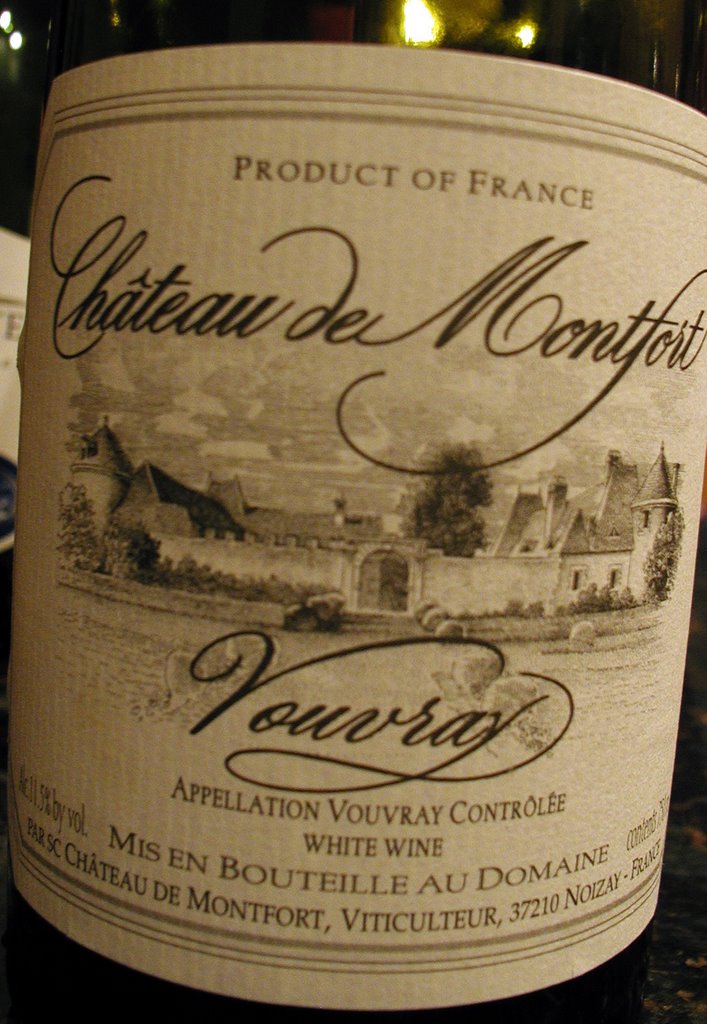
2004 Chateau de Montfort Vouvray FR
Very pale. Refreshing nose of straw and lemon-lime. Noticeable sweetness on the palate with a lingering tart finish as the sweet fades away. Green apple, pear and peach on the palate. Viscous and oily body. 3.5 alone, 3.3 food. 2/4 alone, 2/5 food.
$15.99, Everyday Wines


2005 Riebeek Cellars Chenin Blanc Coastal Region South Africa
Very pale. Floral nose, with mineral metallic notes. Prominent mineral on the palate, but also some citrus and honeydew melon. A touch of bitterness on the finish. Light bodied with high acidity. 2.7 alone, 3.0 food. 2/4.5 alone, 2/4 food.
$8.99, Everyday Wines


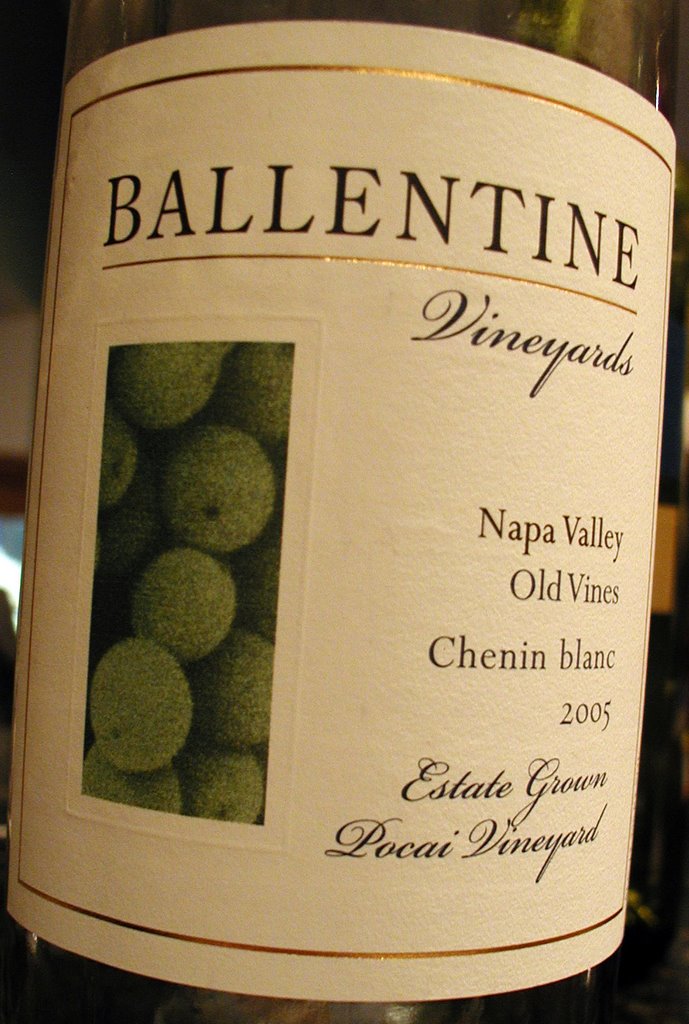
2005 Ballentine Vineyards Old Vines Chenin Blanc Pocai Vineyard Napa Valley California
Very pale. Alcoholic nose, with cantaloupe and a little bit of grass. Big wine - floral, tangy and juicy, with some bitterness on the finish. Fully dry, but lots of fruit. Good balancing acidity, but not sour. Full, but without any viscosity or oil. Good complexity. 3.3 alone, 2.7 food. 2/5 alone, 1/5 food.
$14.99, Village Corner


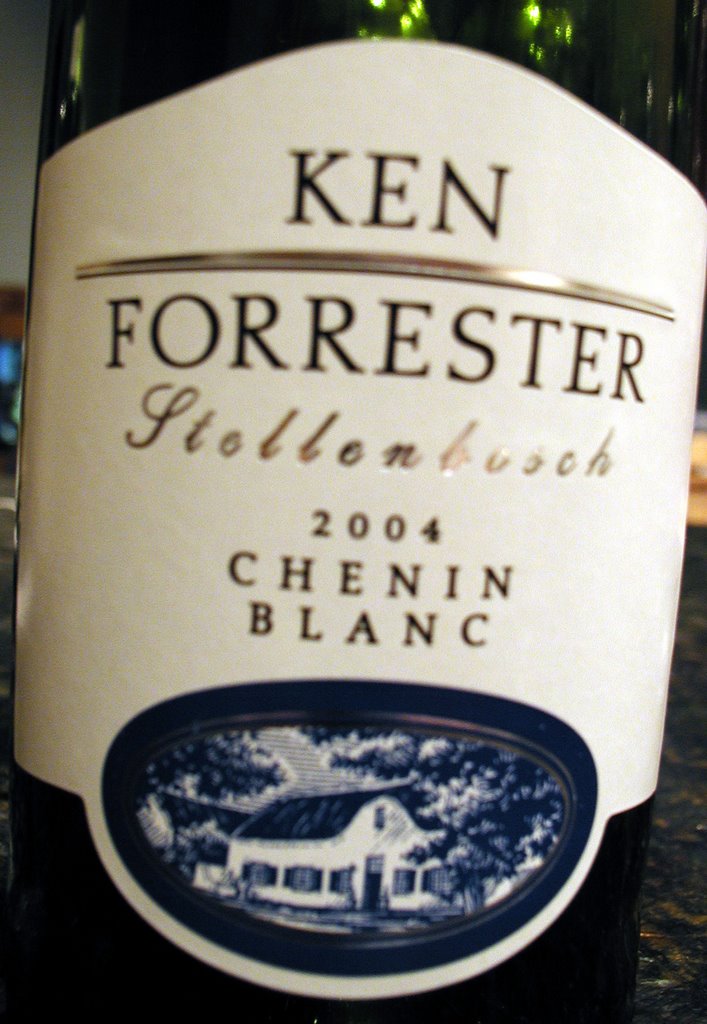
2004 Ken Forrester Chenin Blanc Stellensbosch South Africa
Straw yellow. Nose has honey, oil, flowers, straw and perhaps a bit of apple. On its own, the palate is extremely recalcitrant - hard to get anything from this low acid and full bodied wine except a spicy white pepper finish that lingers. But with food, it's a different wine entirely, and opens up with all kinds of layers of flavors. 3.0 alone, 3.9 food. 2/4 alone, 2/5 food.
$13.99, Village Corner


One of our members works at Zingerman's, so we put him in charge of picking up the munchables. Last night we had three kinds of cheese - a Rolf Beeler 2 yr Gruyere from Switzerland, Tomme de la Chataignerie (an alpine sheep and cow milk cheese from France), and Leonora, a raw milk goat cheese from Spain. And a little bit of dried tomato pesto I whipped up from some tomatoes a neighbor had dried.

That Gruyere has always been a big favorite of mine. Sweet and mellow, with nice crunchy crystals. The Tomme was new to me. Salty and soft, with a distinctly grassy flavor. And goat cheese was excellent, very crumbly but not chalky and wonderfully goaty (but I'm an absolute sucker for goat cheese, so it's kind of a given that I'd like it). The pesto turned out quite well for something I just whipped up on the spur of the moment.